Amazon's Creepy Normalizing of the Surveillance State
During the Superbowl there was an amazing Rorschach test masquerading as a feel-good Ring doorbell commercial. For those who missed it, find it here. Essentially it touts a new service where neighborhood networks of Ring doorbell cameras can combine with Amazon AI to find a lost dog based on an uploaded photo. Half the population reacted, "isn't that wonderful" and the other half of viewers, of whom I am one, reacted "that's freaking scary." The network of camera feeds in the commercial looks very similar to Batman's (admitted even by him) dystopian cell phone surveillance array in the Dark Knight.
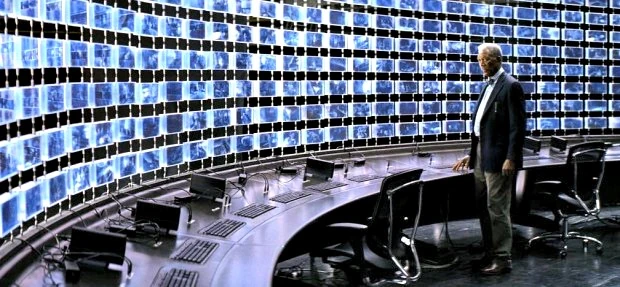
This is exactly the sort of wedge strategy that our public and private control freaks use to normalize dystopian systems and technologies. You don't sell surveillance out of the gate with a system that tracks down a person in the neighborhood behind on taxes or child support. No, you sell it as a system to find that adorable lost dog (notice not even generic pets or certainly not cats because dogs are the new children for this generation**). They can fight all the backlash by saying, "Oh come on, who can be against finding lost dogs?" Then, months or years later, the terms and conditions have morphed and broader search capabilities are enabled without the user even knowing (I own a Ring doorbell and I guarantee I never knew this feature was turned on by default or even existed). When it really gets scary, they are not even going to tell you about it.
I do not believe this is just a marketing mistake -- Ring appears to have adopted neighborhood surveillance as their core business model. I have had a Ring doorbell for years and in its basic form of sending doorbell chimes to your phone and allowing you to see who is at the door and even talk to them remotely, it is a nice product. I have always liked it. But over the years I have noticed Amazon/Ring slowly morphing the app from just a doorbell / security tool into a neighborhood surveillance network. If you have the app, you can see that most of the functionality is now about messaging and notifications shared around the neighborhood, generally dominated by local Karen's putting up panicky posts about someone they saw they thought was creepy. In the main menu of the app, the very first option after a link to the dashboard is called "neighbors." This is the neighborhood watch group on steroids.
As a libertarian, what do I have against private neighborhood voluntary surveillance networks? Nothing, but this is neither voluntary nor private. As for voluntary, this functionality was added on an opt-out basis with zero notification, at least until this commercial came out. But what about privacy?
Well, I spent more time in the app yesterday than I probably had cumulatively over 5+ years. The first thing I did was turn off this advertised feature. From the main menu (the three bars in the upper left) you need to choose control center (not settings) and then scroll way down to "search party" (that is what they call it, to evoke maybe a bunch of guys with St Bernards looking for a lost hiker) and turn it off.
So while I was in the app I started trying to see if there was a way to block Amazon from sharing all this with the government or other third parties. There is an intriguing option in the control center labelled public safety which says it controls public safety agency notification settings -- maybe one can block sharing with the government? Nope. Turns out this option is just to change what police and other agencies can post to your neighborhood feed.
In the same control center there is a privacy tab. I clicked on that, but there are no settings. Only a promise to be really really nice and make our privacy their highest priority but no specific commitments on data privacy. Also note the use of "neighbors" over and over. It is as if they are trying to establish some right to collective privacy (whatever the f*ck that is) instead of individual privacy.
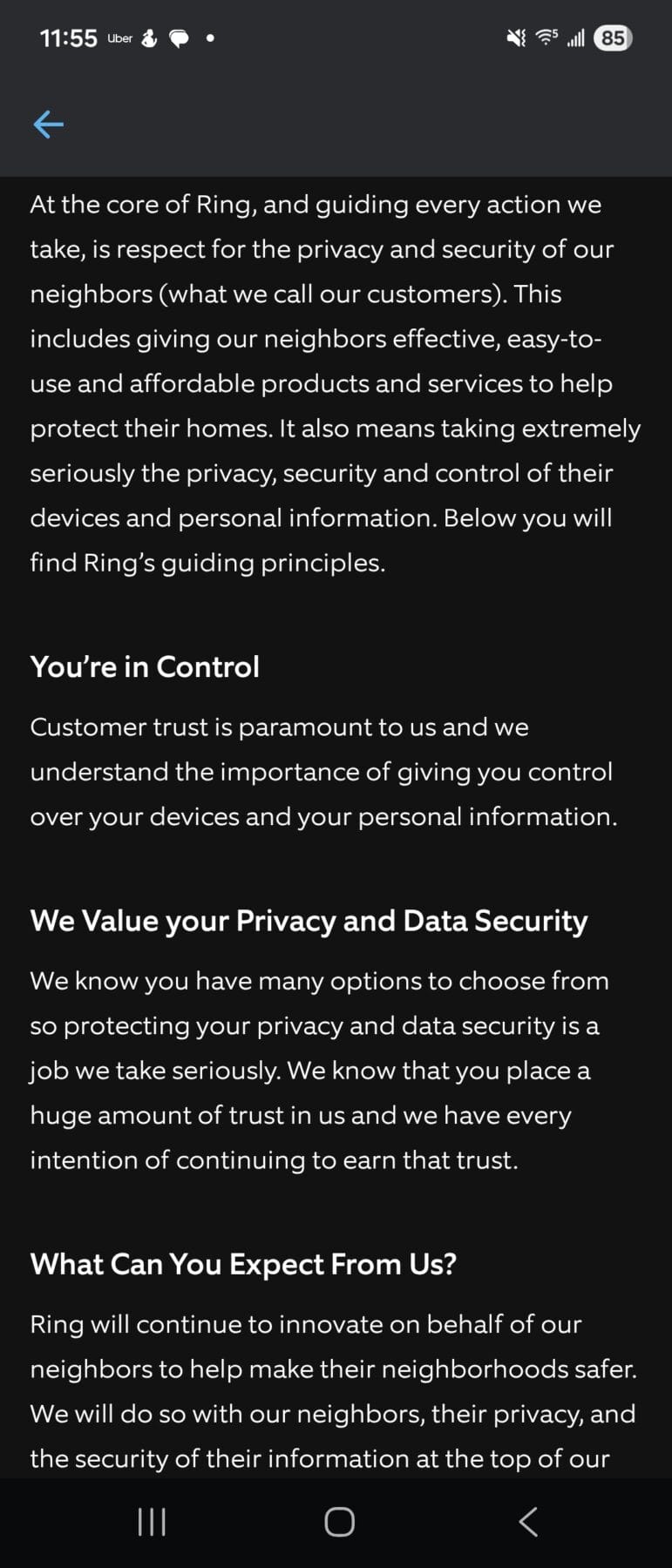
But it does say that I am in complete control so maybe there is a data sharing option somewhere else. Further down we finally get to the "data management" option. It says "Request a copy of your data, manage third-part access, or delete your data." There we go! Here is the screen you get:
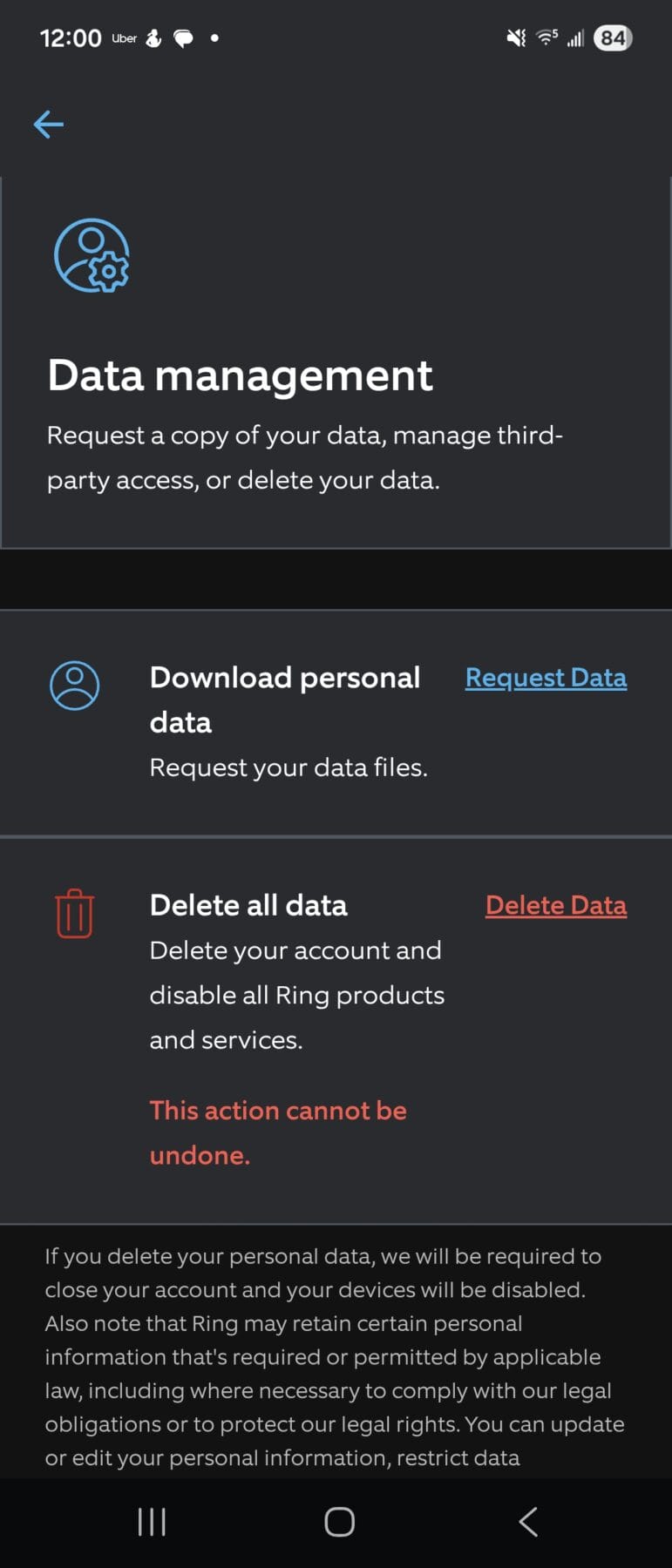
This is the whole screen. Notice anything? As promised, you can download your personal data, I guess just to see what the CIA is looking at. You can delete your data, at the cost of bricking your products. But there is no actual option to manage 3rd party data access. It is promised in the privacy statement, it is promised in the menu header, but it does not exist. After an hour on their site and in the app, I still don't know who has access to my doorbell camera image.
**footnote: The other day in Orange County CA I was doing my 4 mile walk through some neighborhoods and I passed 4 young (at least relative to me) women pushing strollers. When I looked, all 4 strollers had dogs in them, not children. Some time ago someone said (sorry I can't give credit, can't remember) "dogs are the new children, plants are the new dogs." I didn't really understand that until recently but I believe it. I can't remember an airline flight I have been on that had more babies in the cabin than dogs.


