Posts tagged ‘licensing’

Feds Make Illegal What We Already Thought Was Illegal

Via Zero Hedge

today, in a unanimous vote, “The U.S. futures regulator approved on Monday a rule that puts tighter limits on how brokerage firms can use customer funds, a measure that the now-bankrupt MF Global had encouraged the agency to delay.” In other words, while before commingling client accounts was assumed to be a clear violation of every logical fiduciary imperative, now it is set in stone. For real. The CFTC means it.

In the past, I believed that a lot of financial regulations were honest (though often misguided) attempts to create transparent and trustworthy markets.  I am increasingly being pushed to the cynical conclusion that financial regulations, like, say, licensing of funeral homes, are mainly aimed at making it impossible for small competitors to survive, while larger competitors either have the scale to pay for compliance departments, or in the case of MF Global, have the political muscle to get themselves exempted (by Administrations of both parties, I should be clear, though the current one certainly gets a hypocrisy award for standing beside OWS while handing out finance and health care law exceptions to the powerful).

MF Global is far worse in my mind than, say, Enron.  In Enron’s case, the management was at least mostly pursuing the activities and investments that they were supposed to be pursuing.  They were making bets of the type shareholders expected, though they were likely masking the cost and risk of these bets by aggressive pushes at the margins of accounting rules.

MF Global was doing exactly what everyone supposedly knew to be an absolute no-no, ie using client funds to make leveraged bets for their own account.  If Joe Schmoe in Florida did the same thing, he would already be incarcerated.  In the case of MF Global, no one even seems to be interviewing Corzine and so far the bankruptcy committee has put a higher priority on repaying JP Morgan and Goldman for Corzine’s bad bets than on getting investors’ money back.

Amazing Regulatory Over-Reach

I want bother to except this, you really need to see the post in its entirety.  Popehat looks at 98 pages of Colorado state regulations on day care centers.  The breadth and depth of the regulations, down to exactly how many of what type blocks kids should have to play with, is just amazing.

This is job security for life for a bunch of bureaucrats.  If we require all this stuff, we need regular reporting don’t we, on compliance.  And inspections. And a detailed licensing and application process.  And ten years from now, when all the day care centers are closed or cost too much, we will need extensive government programs to provide subsidized day care.

Regulatory Accumulation

There are certain regulatory agencies where it is clear from the outset that most of the agency’s activity is merely aimed at protecting their own jobs and power.

The one such agency I run up against are Alcoholic Beverage Commissions in various states, from whom one must obtain a liquor license.  In the type of small store we run, there are really only two things the state should care about, and even the second is a bit weak

  • That we don’t sell alcohol to underage kids
  • That we don’t allow alcohol consumption on the premises

But the liquor licensing process can be interminable.  In Arizona, for example, I have had my applications kicked back to me, which resulted in 2-month delays in the process, because I wrote an address as 1313 48th Pl.  rather than 1313 48th Place.  They spend incredible man-hours looking for nit-picky mistakes like this, and then kick it back so that the whole review process must begin again.  Many states and counties have a second layer of review, to make sure that your new competition is “needed” – after all, we wouldn’t want to upset the position of incumbent businesses who are entitled to their market share and who make nice campaign contributions.

Each application has to have a drawing of the store layout and where one plans to put the beer.  If you want to move the beer at a later date, you have to get the state’s approval.  (Bizarrely, the drawing in most states has to be by hand — they will kick back an application with a CAD drawing or architect’s drawing).  And don’t get me started on the fact I have to be finger-printed by the FBI (so they can be sure I am not Al Capone) before a store I own can sell beer.

All this being said — and I didn’t mean to run on so long but liquor licensing just drives me nuts — it is nothing to this example from the pharmaceutical manufacturing business. I won’t repeat it all, but take this example:

a drug manufacturer must get approval for how much of a drug it plans to produce, as well as the timeframe. If a shortage develops (because, say, the FDA shuts down a competitor’s plant), a drug manufacturer cannot increase its output of that drug without another round of approvals. Nor can it alter its timetable production (producing a shortage drug earlier than planned) without FDA approval.

They have to get their production schedules approved?  What possible justification can there be for this?  But even more outlandish is the apparent drive to regulate drugs that have been on the market for over 70 years and have to date been relatively unregulated because they were on the market before the FDA got its current powers.   Why should a bureaucrat lose her job when there are still unregulated items out there?  Besides, some uneducated American might use these examples of safe, unregulated drugs to question the who regulatory mission!

Several drug shortages (e.g., concentrated morphine sulfate solution, levothyroxine injection) have been precipitated by actual or anticipated action by the FDA as part of the Unapproved Drugs Initiative, which is designed to increase enforcement against drugs that lack FDA approval to be marketed in the United States. (These drugs are commonly called pre-1938 drugs, referring to their availability prior to passage of the Food, Drug, and Cosmetic Act of that year.) Some participants noted that the cost and complexity of completing a New Drug Application (NDA) for those unapproved drugs is a disincentive for entering or maintaining a market presence.

I have heard several medical people joke that it would be tough to get aspirin through the FDA today if it were a new drug and not grandfathered.  Don’t know if that is true, but it feels believable.

Licensing Has Nothing to Do With Consumer Protection

Yeah, I know, this is volume one hundred and something in a series, but it is such a crystal clear example of government licensing working primarily to protect incumbent competitors in an industry I have to share it.

Suppose you’re the owner of a taxicab company in a largish metropolitan area. One day you notice some taxis tooling around town—and they’re not yours. They belong to an upstart competitor. His cars are newer, his drivers are nicer, and his fares are lower. Pretty soon your profits start shrinking. What are you going to do about it?

You have a couple of choices. Option A: Invest a lot of money in new vehicles, customer-service training for your drivers, GPS systems to map faster routes and so on. A lot of expense. A lot of effort.

So you go for Option B: Invest a little money in a few politicians, who adopt a medallion law: Only licensed operators with city-issued taxi medallions may operate cabs. The oldest cab companies get first dibs on the medallions, at the lowest rates. Only a few medallions are left over for the new guy, and he can’t afford them anyway. Bingo—your competition problem is solved. The customers might not like it, but what are they going to do—walk?

Apparently this is exactly what is happening in DC

Now it’s the District of Columbia’s turn. Four members of the D.C. City Council have introduced a bill that would create a medallion system for the nation’s capital. Medallion prices would start at $250 for the most established taxi companies and, for the newer entrants, run as high as $10,000. At least initially. As time wore on, it’s likely that the price of a medallion would go up for everyone. That’s what has happened in places such as New York, where a government permission slip to drive a cab costs about $600,000. In Boston, which initially capped medallions at 1,525 in the 1930s—and more than a half-century later had added only 250 more—a medallion will cost you $400,000.

At present the District has more than 10,000 licensed taxi drivers; the proposed legislation would establish only 4,000 medallions. Needless to say, such artificially imposed scarcity also drives up prices. A study by Natwar Gandhi, the District’s chief financial officer, found that fares in cities with medallion systems are 25 percent higher than in cities with open taxi markets.

By the way, for extra points, here is a lawsuit right out of Atlas Shrugged

That story has played out in many cities across the United States, with sometimes amusing variations. A decade or so ago, Minneapolis (population 300,000-plus) allowed a grand total of 343 taxis to operate until Luis Paucar, an immigrant, filed suit. The city council decided to allow another 45 cabs. Then the existing cab companies sued, using the creative legal theory that they had a constitutional right not to face competition. (They lost.)

Licensing is Anti-Consumer

Via Carpe Diem, yet another group of market incumbents using licensing and regulation to limit competition and, in particular, ban business models different than those of the incumbents.

From the Institute for Justice: “Until 2010, sedan and independent limo services were an affordable alternative to taxicabs in the Music City. A trip to the airport only cost $25. But in June 2010, the Metropolitan County Council passed a series of anti-competitive regulations requested by the Tennessee Livery Association – a trade group formed by expensive limousine companies. These regulations force sedan and independent limo companies to increase their fares to $45 minimum.

The regulations also prohibit limo and sedan companies from using leased vehicles, require them to dispatch only from their place of business, require them to wait a minimum of 15 minutes before picking up a customer and forbid them from parking or waiting for customers at hotels or bars. And, in January 2012, companies will have to take all vehicles off the road if they are more than 7 years old for a sedan or SUV or more than 10 years old for a limousine.

Really This Much Value Left?

Dish Network is going to buy Blockbuster out of bankruptcy for $320 million.  I am frankly floored there is that much value.  I have found that one can make a surprising amount of money riding an obsolete business down over the years if it is managed correctly — but this is generally for product businesses.  Retail businesses are really hard to ride down because you need to be closing stores every year and that is hard to do cost-effectively given typical lease terms.  Never-the-less, I expected the winning bid to be from a liquidation company, someone like the folks who took wound down Circuit City.

But the purchase by Dish Network implies that the buyer wants to continue operating Blockbuster in some form, and the identity of the buyer implies some sort of on-demand or streaming service.  But what does Blockbuster offer?  Is the brand valuable in this context, or a liability?   Does it have customer loyalty with a segment (old people?) who have so far shied away from Netflix / Hulu?  Does Blockbuster have favorable royalty / licensing contracts with studios that are transferable to other video delivery models?

If I had to guess, I would bet on the latter.  There have been examples of whole businesses built from legacy contracts.   One of the best examples is a little noticed contract Carl Icahn had with TWA, which spawned a huge new travel agency and later really helped to build Priceline.com.  Here was the story:

When TWA got a loan from Carl Icahn, an almost unnoticed part of the deal was that a certain travel agency owned by Icahn, small at the time, would be guaranteed TWA tickets at a healthy discount off the lowest published fares.  This agency, with this boondoggle, grew to enormous size as Lowestfare.com.  TWA, beyond the reasons listed above, therefore had a second reason for not wanting to publish their lowest possible fare.  Normal limitations that most airlines could set on how many seats would be available at their lowest fare could not be enforced by TWA.  If they offered a new $100 fare, Lowestfare.com could blow out an unlimited number of tickets at $80 or less and TWA would have to accept it.  Therefore, by offering discounts unpublished via Priceline, TWA prevented the travel agency from getting inventory even cheaper.  And so, a huge portion of the early Priceline inventory was TWA.  (ironically, after the American Airlines acquisition of TWA killed the deal, the Lowestfare.com URL was bought by … Priceline.

I wonder if Blockbuster has something of similar value in their royalty / licensing agreements?

Licensing to Restrict Competition

The WSJ has yet more examples of crazy job licensing, example:  (ht Alex Tabarrok)

But economists—and workers shut out of fields by educational requirements or difficult exams—say licensing mostly serves as a form of protectionism, allowing veterans of the trade to box out competitors who might undercut them on price or offer new services.

“Occupations prefer to be licensed because they can restrict competition and obtain higher wages,” said Morris Kleiner, a labor professor at the University of Minnesota. “If you go to any statehouse, you’ll see a line of occupations out the door wanting to be licensed.”…

Texas, for instance, requires hair-salon “shampoo specialists” to take 150 hours of classes, 100 of them on the “theory and practice” of shampooing, before they can sit for a licensing exam. That consists of a written test and a 45-minute demonstration of skills such as draping the client with a clean cape and evenly distributing conditioner. Glass installers, or glaziers, in Connecticut—the only state that requires such workers to be licensed—take two exams, at $52 apiece, pay $300 in initial fees and $150 annually thereafter.

California requires barbers to study full-time for nearly a year, a curriculum that costs $12,000 at Arthur Borner’s Barber College in Los Angeles. Mr. Borner says his graduates earn more than enough to recoup their tuition, though he questions the need for such a lengthy program. “Barbering is not rocket science,” he said. “I don’t think it takes 1,500 hours to learn. But that’s what the state says.”

Many, many other examples — it takes 750 hours of training to be a manicurist in Alabama.  Somehow my daughter learned to paint her own nails during the course of a single sleepover.

Massachusetts Goes Over the Line

Just after the Giffords shooting, Travis Corcoran, who I link from time to time for his biting commentary, posted something along the lines of “one down, 534 to go.”  I didn’t like the comment, but it was not wildly different from his quasi-revolutionary rhetoric he often uses when describing the fraud and outright criminality of public officials.  In the context of his body of work, I did not find it either surprising or particularly troubling, and certainly did not take it as a call to action or overt threat.  I merely thought it in poor taste.

The comment went viral, and many others trashed him on blogs and in his comments — these folks found the comment to be much worse than just poor taste.  Their response was exactly what one does in a free society in reaction to speech we don’t like — we use speech in response.  Travis strikes me as a big boy who was able to handle the consequences of his speech.  Unlike many more cowardly sites, Travis did not re-edit the post to whitewash it or secretly eliminate it.

However, some folks were apparently not happy with just responding with speech.  Typical of modern discourse, certain folks wanted to win their argument by bringing the coercive power of the state in on their side.  Apparently, Massachusetts gun laws allow for revocation of firearms permits under certain vague circumstances (which are conveniently flexible for the state).  Travis had agents of the state (or local?) government show up at his door and confiscate his firearms.  Now, presumably there is a legal ruckus going on (TJIC is not one to take such things passively) and his site is down (presumably under advice of attorneys).

This strikes me as way over the line.  The implied threat does not meet any of the well-worn court judicial tests for speech that can be actionable as a threat.  I don’t know enough law, and have not really studied the statute in question, to know whether this particular gun licensing law is able to establish a broader definition of threat (I am not sure it even has been tested in court).

But I am certain about one thing, because the statement I am about to make applies to just about every government law with vague terminology that leaves enormous room for selective interpretation and enforcement:  There is probably no way the state of Massachusetts or the city of Arlington can argue that this effective restriction on speech is being enforced in a viewpoint neutral way.  I bet I could find a whole boatload of radical leftish academics with firearms who have made far more specific threats and never have, and would never have, such restrictions enforced against them.

Update: Apparently there are threats of other legal actions.  I have just no time to blog right now, but Radley Balko has what seems to be a fair take and a lot more information.

Who Knew The Great Zombie Invasion Was This Easy to Thwart?

Via the Washington Post and Hit and Run

The National Park Service says it has no permit filed for zombie activity at the Lincoln Memorial Tuesday morning by AMC, a posse of zombies, or anyone else.

Wow, that was easy to stop.  And here I thought government permitting and licensing requirements were counter-productive.  Chalk one up for the statists.

Nobody Likes Having Competitors, but Only the State Can Ban Them

Private companies often come running to the government to protect themselves from competition.  Sometimes they are successful, and get government licensing and certification requirements that help create barriers to entry that protect incumbents  (if incumbents are lucky, they will actually get to control the licensing and certification board and testing process).

But whether or note private companies have the political muscle to get this kind of protection, the government almost always protects itself whenever it embarks on any sort of quasi-commercial enterprise.  The ban on first class mail delivery competition is one example (as an aside, when email began making an end run around this ban, the USPS actually made a [fortunately failed] play to be the monopoly email provider).  In Denver, there was a story a while back that after they built a new toll road, they added traffic lights and lowered the speed limit on a parallel free road to drive more people to the toll road.

Carpe Diem brings another example:

“When the old arena for the Orlando Magic opened 21 years ago, it was common for Parramore neighborhood residents who lived nearby to charge Magic fans and concert-goers to park on their property. But five weeks ago, the Orlando City Council approved standards that will likely keep most Parramore homeowners from profiting on parking near the Orlando Magic’s new $480 million Amway Center (pictured above).

Among other things, property owners must pay a $275 application fee and provide a business tax receipt. Lots must have an attendant, signs, proper lighting and a paved, gravel or grass surface free of potholes or ruts. City officials also recommend hiring security. Even when all those requirements are met, temporary parking lots are allowed only during an event expected to draw at least 5,000 attendees. So far, five applications have been approved, but all are for large properties such as churches, not homeowners.

The city, meanwhile, has doubled its event-parking rate to $20 at the two garages closest to the Amway Center; elsewhere, event parking at city garages and lots is $10.”

The last sentence explains the first two. They are trying to charge an above market price for parking, so must constrain supply to avoid being undercut.

GRRRRRR. Commerce is Not a “Privilege”

The government terminology that tends to tick me off the most is calling commerce a “privilege” that can only be granted to the state and therefor must be licensed with appropriate tribute paid to the state for the “privilege.”  Here in Arizona our sales tax is called a “transaction privilege tax.”  Here is a story about licensing bloggers in Philly:

Between her blog and infrequent contributions to ehow.com, over the last few years she says she’s made about $50. To [Marilyn] Bess, her website is a hobby. To the city of Philadelphia, it’s a potential moneymaker, and the city wants its cut.

In May, the city sent Bess a letter demanding that she pay $300, the price of a business privilege license.

Selling one’s labor, and conducting commerce to the mutual interest of two parties are fundamental rights rather than artificial constructs granted by the state.

Licensing Naivite

OK, so after the monks and coffins, here is the future licensing act ripe for abuse by industry incumbents to protect their position.

New state licenses required for anyone handling a mortgage application could help prevent a repeat of the bad loans that contributed to Phoenix’s housing crash….

The law, passed in 2008, creates state oversight for people who take loan applications, gives consumers an avenue for reporting misconduct and establishes a fund to help repay borrowers who lose money because of unethical or illegal acts by their loan officers.

The law faces hurdles, as cash-strapped Arizona struggles to process thousands of new applications.

Still, advocates call it a success. Many of the risky – and sometimes illegal – home loans that helped lead to record foreclosures in Arizona might not have been made if the more than 10,000 unlicensed loan officers working then had been subject to more oversight.

How?  If people were selling illegal home loans before, they were already breaking the law and the state obviously was unable to enforce the law.  How is adding a piece of paper that must be applied for each year going to help?  My company has all kinds of silly licenses – liquor licenses, guiding licenses, health licenses, tobacco sales licenses, over-the-counter drug sales licenses, even egg licenses – and in not a single case does the issuer of these licenses exercise any sort of oversight of our operations.  If they get their extensive paperwork (so workers have an excuse to retain their jobs – after all someone has to process the paperwork) and their check, that is generally the sum of interactions with these organizations.

Now, some of these licenses were hard to get in the first place, but not for any reason of my character or ethics or business model.  They were hard to get because their issuance has been co-opted by incumbent businesses in the state who use the process to limit competition.  Liquor licenses are a great example – in places like Shasta County CA and Lake Havasu City AZ, we had a real problem getting the liquor license over opposition from existing businesses.

This is almost mindless naivete:

“Loan-officer licensing is long overdue in Arizona,” said Felecia Rotellini, who for five years served as superintendent of the Department of Financial Institutions, the state agency regulating the mortgage industry. She is running for Arizona attorney general.

“A lot of bad loans wouldn’t have been made if we had it before,” Rotellini said. “It gives me peace of mind for consumers to know we have licensing now.”

The author of the article just throws the following statement out there without any source, as if it was an axiom with which we all would agree

In Arizona, the housing boom and crash were partly fueled by loan officers, how they operated and how they were paid.

In fact, the author’s incredible confidence in licensing is undermined in this adjacent statement:

Mortgage brokers, who run firms that connect borrowers with the best loans, have long been regulated by the Department of Financial Institutions.

Brokers employ loan officers, who work directly with borrowers, collecting their Social Security numbers and financial information to determine whether they qualify for a loan. Loan officers usually recommend types of mortgages and lenders.

These officers, sometimes called originators, weren’t subject to state scrutiny. They worked under the licenses of their brokers, much the way an apprentice would work for a licensed contractor. Previously, that oversight was considered sufficient.

So the firms these guys worked for were licensed, but the individual employees were not. But if that licensing of firms, which after all is the level where loan practices and compensation policy are set which supposedly are at fault, how does licensing individual employees help? This is a typical political step that a) gets some state organization more money and power, b) generates one sound bite in a news cycle for some politician to tell voters that they care and c) does zero for consumers.

At the end of the day, the real cause of the housing boom was easy credit, and yes loan officers participated in this given that their commission-based incentives caused them to want to make every loan possible.  But this incentive outcome would not have been some kind of insight to the people and system that employed the loan officers.  In fact, everyone from the loan officer to the Congress wanted easy credit, and to blame one link in the chain of delivering this credit to consumers is madness.  Going forward, there is absolutely no evidence that the government is going to reduce its history of promoting easy credit, as evidenced by any number of federal loan modification and lending programs over the last 2 years.  So the likelihood that a government regulatory agency could have somehow headed off the bubble and its bursting is just silly.  The government was a party to it.

In the long run this mechanism will almost certainly be co-opted by current loan issuers as a way to limit competition, much as real estate agents and lawyers and funeral home directors already do.  As a minimum, this is a way for mortgage brokers to outsource some of the cost of running background checks and such on their employment candidates onto taxpayers.  In fact, I wonder who was behind this law in the first place?

Backed by mortgage brokers and real-estate regulators, the law quietly went into affect on July 1

Licensing is Anti-Consumer (An Ongoing Series)

This week’s episode — Monk’s making simple caskets to support themselves must desist because Louisiana has detailed licensing laws to protect current funeral homes from just this type of low-cost competition. This is what the monks would have to do to sell what is basically a nice wooden box

Louisiana law purports to require that anyone who is going to sell a casket has to jump through all same regulatory hoops as a full-fledged mortuary operation that embalms bodies. See, selling “funeral merchandise” (including caskets) means you are a “funeral director.” And to be a “funeral director,” you must be approved for “good moral character and temperate habits” by a funeral-related government entity [of course, that's in Louisiana, but still], complete 30 semester hours at college, apprentice with a funeral director for a year, pay an application fee, and pass an exam. But that’s not all. If you want your facility to sell caskets, it’s got to qualify as a facility for funeral directing, including a showroom and “embalming facilities for the sanitation, disinfection, and preparation of a human body.”

The monks are being represented by the IJ (what the ACLU should have been if it weren’t for its Stalinist founders) which hopes to get to the Supreme Court.  If I were one of the monks (wildly unlikely as that is) I might be tempted to sell them as “human-sized wood boxes” rather than coffins and see where that got me.

Building Codes and Protectionism

I have written a lot about state licensing typically being more about protecting incumbents from competition than consumer protection.  This is a story in a similar vein, where plumbers worked to stop the approval of waterless urinals because they required, well, fewer plumbers to install.  In the end, there was a compromise — the plumbers would support waterless urinals in the code, BUT the code would also say that water still had to be piped to the urinals that don’t need water.  I kid you not.

This reminds me of when railroads were switching from steam locomotives to diesel.  The switch basically obsoleted the job of the fireman, who shoveled coal and kept the fire optimized in the boiler.  Faced with extinction, the fireman’s union followed a gutsy strategy — they demanded that diesel locomotives have two firemen instead of one!  You see where this is going.  Eventually, they compromised at one, so for years, decades even, useless firemen were paid to ride around on locomotives.

Dispatches from the Corporate State

From the WSJ:

Robert Brownson long believed that his proposed development here, with its 200,000-square-foot Wal-Mart Supercenter, was being held hostage by nearby homeowners.He had seen them protesting at city hall, and they had filed a lawsuit to stop the project.

What he didn’t know was that the locals were getting a lot of help. A grocery chain with nine stores in the area had hired Saint Consulting Group to secretly run the antidevelopment campaign. Saint is a specialist at fighting proposed Wal-Marts, and it uses tactics it describes as “black arts.”…

Supermarkets that have funded campaigns to stop Wal-Mart are concerned about having to match the retailing giant’s low prices lest they lose market share. Although they have managed to stop some projects, they haven’t put much of a dent in Wal-Mart’s growth in the U.S., where it has more than 2,700 supercenters—large stores that sell groceries and general merchandise. Last year, 51% of Wal-Mart’s $258 billion in U.S. revenue came from grocery sales.

Read the whole article.  There hardly appears to be any major grocery chain or related union that has not contributed significant dollars to preventing their competitor from doing what they have already done – built a store in town.  Knock me over with a feather that Chicago is a major example, training ground for our President and promoter-in-chief of our emerging corporate state.

The only sustainable monopolies are those enforced by the government, which through licensing, regulation, zoning, or all of the above, squash upstart competitors at the expense of consumers in favor of politically connected incumbents.

We Have No Idea What We Are Doing

Its pretty clear from this summary of the Obama administration legal brief that the Administration has no idea what its own immigration policy should be.  I don’t agree with all of the author’s statements (for example, I am not a fan of e-Verify, as it just reinforces to me that the government has gotten itself in the business of licensing labor) but its a pretty interesting summary of just how muddled the Obama administration is on this topic.  While I don’t support our newest immigration law here in AZ, its easier to see why states like AZ feel the need to take some independent leadership on the topic.

In this brief, the Obama administration is challenging an earlier AZ state law that requires, as a condition to retain one’s business license, that companies use e-Verify to check new employees legal work status  (here and here).  Unfortunately, Obama’s head of Homeland Security (and thus all immigration-related activities) actually signed the law into being and the administration wrote a brief in favor of the law just 9 months ago, about the same time Congress reauthorized e-Verify without doing anything to strike down AZ implementation practices).  I am not much of a legal scholar, but states use compliance with Federal programs all the time as minimum requirements for retaining business licenses — e.g. non-payment of Federal taxes can cause one to lose his state business license, but no one has ever argued that is an illegal intrusion of states on federal powers.  If the Feds want to argue all of these provisions are unconstitutional, fine by me.  Anyway, the article linked above is highly entertaining.

Postscript: Here is the e-Verify post one must post in his business to be legally compliant:

This is fairly Orwellian for those of us who believe that all people have the right to work, irrespective of the country they were born in, and this right does not flow from any national government and therefore does not stop or start at any border.

Creating the American Pravda

It is a beautiful day here, so I really don’t have the time or desire right now to summarize the absolute mess that is the FTC discussion draft for the “reinvention of journalism,” reinvention being a synonym apparently for government takeover.  Almost every proposal is fraught with unintended (or perhaps intended but hidden) consequences, faulty economics, and unprecedented attacks of the first amendment.  If you don’t have the time to read it, I will try to summarize it next week, but just open it and scroll the bold headers with the proposals.  Its really outrageous.  Here are just some quick highlights:

  • Substantial narrowing of fair use, with particular focus on how search engines and other online sites (e.g. blogs) use and/or have to pay for access to news sites
  • Expansion of news copyrights on breaking news – ie certain papers will own the copyrights to certain news events if they are the first mover on it
  • Increased government funding of news organizations along multiple vectors, from subsidies to guaranteed loans to income tax checkoffs to lower postal rates to Americorps programs for for journalists.
  • Simultaneously reduce private funding of journalism through taxes, including a tax on advertisers
  • Shift the organizational model of journalism from profit corporations (which rely on satisfying individuals to get their revenue) to non-profit organizations dependent on the government for funding
  • New taxes on and licensing of the Internet.   New taxes on broadcast spectrum to subsidize print media (shifting money from media that are more hostile to the administration to print media and non-profits that are more sympathetic to the administration).

Here is the intro that was missing from the report:  “The New York Times and Newsweek can’t figure out a profitable business model in the Internet age.  We propose the government step in with all means at its disposal to limit competition to these print media companies and create new government subsidies for their business.  Once their companies’ profitability is absolutely dependent on these government mandates and subsidies, the Federal government will have a powerful source of leverage to protect itself from criticism in these outlets.  Once we have this situation in place, we will have a strong inventive to quash more independent outlets and maximize the market share of media companies beholden to the government.  In a large sense, our recommendations build off the success of the tobacco settlement experiment, where a few large companies agreed to pay the government large percentages of their future profits, and then the government worked diligently to quash new tobacco competitors to maximize the market share of those companies paying it settlement money.”

Update: South Bend Seven makes an interesting comparison to campus newspapers.

Progressives Ignoring Settled Science

I hate to quote almost all of someone’s blog post but hopefully Todd Zywicki will treat it as a compliment

Some of the results in this new article by Zeljka Buturovic and Dan Klein in Econ Journal Watch (a peer-reviewed journal of economics) are startling:

  • 67% of self-described Progressives believe that restrictions on housing development (i.e., regulations that reduce the supply of housing) do not make housing less affordable.
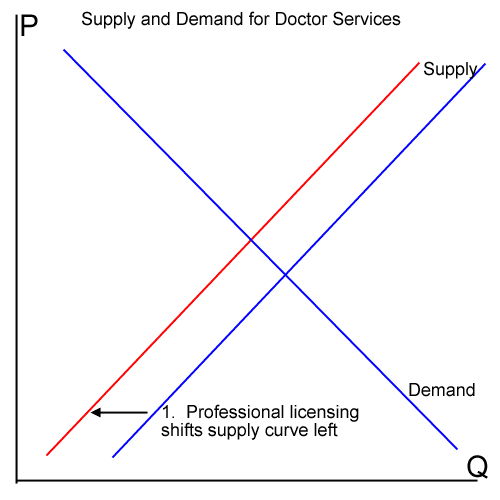
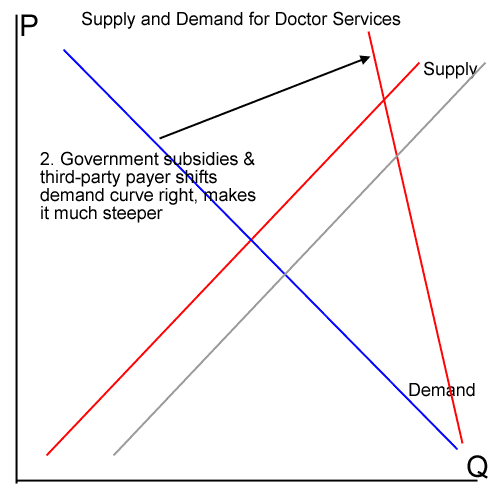
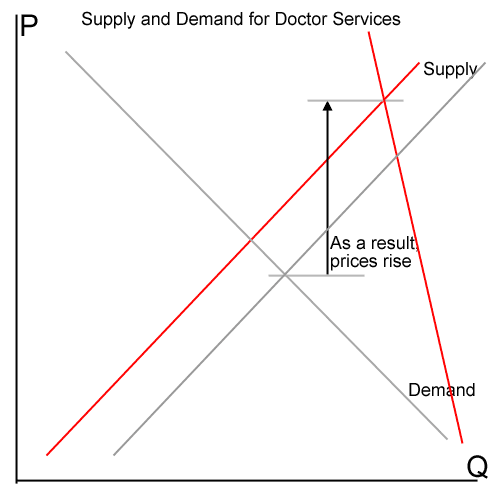
  • 51% believe that mandatory licensing of professionals (i.e., reducing the supply of professionals) doesn’t increase the cost of professional services.
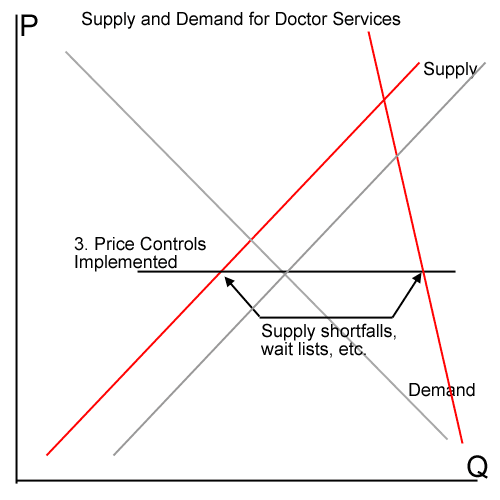
  • Perhaps most amazing, 79% of self-described Progressive believe that rent control (i.e., price controls) does not lead to housing shortages.

Note that the questions here are not whether the benefits of these policies might outweigh the costs, but the basic economic effects of these policies.

It would be hard to find a set of propositions that would meet with such a degree of consensus among economists to rival these propositions–which boils down to supply restrictions raise prices and price controls create shortages.  These are issues on which economic theory is exceedingly clear, well-confirmed over decades of empirical support, and with a degree of unarguable consensus among trained scholars in the field.  Apparently the existence of a “consensus” among trained scholars on certain policy issues is less important on some issues than others.

Illegal Immigration and the Rule of Law

As is usual when I make an immigration post (wherein I am supportive of open immigration and suspicious of gung-ho enforcement efforts) I got mail saying that the real concern here is the rule of law.   People inevitably want to inform me that this immigration is ILLEGAL (usually in caps) and that these immigrants are BREAKING THE LAW and that the law cannot be enforced unevenly.

First, I am happy to listen to this argument from any commenter who has never broken the speed limit or done a rolling stop at a stop sign.

Second, I would like to offer the rule of law folks, especially those on the right side of the aisle, a thought problem:  Soon, it will be illegal to not purchase a health insurance policy that meets specifications set by Congress.  It is anticipated, however, given relatively low fines, that many people will break this law and not obtain health insurance.   This failure will be ILLEGAL.  These people will be criminals.  Do those of you who seek higher penalties, more robust enforcement, police sweeps, and reduced standards of probable cause for people committing the crime of illegal immigration also plan to seek the same higher penalties for lawbreakers who do not buy an insurance policy?   After all, as you have said, this is not about the law itself but respect for the rule of law.

By your immigration logic, we should be ruthless about lawbreakers who do not have the right insurance policy.  We should encourage the Minutemen to patrol for people without health insurance — after all, they have said that their concern is with people breaking the law, not immigration or Mexicans per se.  There should be sweeps where people can be arrested for suspicion of not having health insurance, just as they can be arrested under our new AZ law for suspicion that they do not have a green card.

If there is a difference, please explain it to me.  I understand that you may be opposed to open immigration or high immigration rates or immigration by poor uneducated people or whatever.  If so, fine, we disagree — but stop saying that this is all about the rule of law, or telling me we can’t pick and choose what laws we violate.  Because we do the latter all the time.  Our willingness to challenge the state is a large part of American exceptionalism.

PS- Just to avoid misunderstandings from trolls who do not usually read this site, of course I do not advocate the above for health insurance violations.  Just as I don’t for Mexicans seeking a better life in this country without obtaining a license to do so from the government.

Disclosure: I have several good friends who are illegal immigrants.  They are wonderful, hard-working people who have been in this country for years.  If we were to conduct tests of people’s acceptability to be present in this country, they would pass with scores far ahead of many US citizens.

Update:  I find the argument that open immigration and an overly-generous welfare state can’t coexist to be moderately compelling, though I don’t see why we could tie citizenship narrowly to receiving these benefits.  I have problems saying that a government license in the form of a green card is required for mere presence in the country.  I have no problem imposing this licensing requirement for receipt of unearned goodies.

I Can’t Let This Pass Without Some Scorn

Via the Telegraph:

The American blogosphere is going increasingly “viral” about a proposal advanced at the recent meeting of the Davos Economic Forum by Craig Mundie, chief research and strategy officer for Microsoft, that an equivalent of a “driver’s licence” should be introduced for access to the web. This totalitarian call has been backed by articles and blogs in Time magazine and the New York Times.

As bloggers have not been slow to point out, the system being proposed is very similar to one that the government of Red China reluctantly abandoned as too repressive. It was inevitable that, sooner or later, the usual unholy alliance of government totalitarians and big business would attempt to end the democratic free-for-all that is the blogosphere. The United Nations is showing similar interest in moving to eliminate free speech.

I called this one back in 2005.  This isn’t the first attempt by the UN in particular to throttle free speech via licensing way back in 1985.

Licensing is Anti-Competitive — This Time, Its Personal

I have written any number of times about how the justification for licensing is usually consumer protection or safety but the actual purpose is to protect larger, entrenched incumbents against competition.  However, most of those stories have been about caskets or hair braiding or other businesses that don’t really affect me.  This time, its personal.

Sometime last October we needed a boat moved across the country from one of our marinas to another.  We found a local guy who was going in the right direction anyway and paid him a couple hundred bucks to haul the boat on a trailer behind his pickup.  Note that this is a perfectly ordinary pickup truck and a perfectly normal pontoon boat, the kind of car-trailer rig you can see thousands of people driving to the lake every Saturday morning.

The driver was stopped at a checkpoint in Wyoming.  And was busted there, at least long enough until he could give them my name and number and escape.

Why was he busted?  Because a) the truck/boat combination apparently weighed a tad more than 10,000 pounds and b) the boat was being moved for a commercial purpose  (i.e. it was a business asset).  Unknown to me, the combination of these two takes this transport event to the realm of “commercial carrier,” which requires a Department of Transportation (DOT) license and a slew of regulatory responses.   Technically, the contractor we paid was at fault, but he escaped any legal problems because 1) he claimed he was our employee (untrue) and 2) he claimed he was driving our truck (untrue).  This led to Wyoming and later the DOT calling me asking for my DOT number (which I didn’t have), my employment records (for a person who is not my employee) and my vehicle records (for a truck I have never owned).

Months later, I am still going back and forth with the cops in Wyoming.  But in the mean time I decided that since I was likely to move my stuff across state lines again, I might as well get my DOT number.  So I started that process.

As it turns out, there is absolutely no difference in regulation and compliance requirements between driving my own boat across state lines once a year and running United Van Lines.   The regulations one has to know are hundreds of pages long.  The user-friendly summary is 162 pages long! And it is careful to state, Please do not use this guide as a substitute for the Federal Motor Carrier Safety Regulations.“  There are driver and vehicle files that have to be maintained, special driver certifications, driver medical tests and certifications, etc.

In other words, there is absolutely no accommodation for a company like ours that is doing nothing different than you are driving you boat to the lake, but we have to set up a compliance and record-keeping system that trucking companies have whole departments for.  Which, of course, is the point.  Compliance costs for regulations can always be born easier by large companies and by incumbents.  The idea is to make it so onerous for individual companies to move their own boats that they are willing to pay over-priced Teamster-friendly trucking corporations to do it for them.  The point is not to make us safer – the average individual unregulated boater hauls boats more miles a year than we do – the point is to make sure we don’t compete, even in the smallest way, with established trucking firms.

By the way, the issue that is likely to kill the deal totally on our getting a DOT number is the government mandate that I drug test my employees.  The relationship I wish to have with my employees is not one that encompasses my demanding samples of their bodily fluids on a regular basis.  I have turned down at least two potentially lucrative management contracts because both had drug-testing requirements and I am not going to do it.

Licensing Protects Competitors, Not Consumers

This is a long-running series on this blog, and the most recent example comes from John Stossel.

[T]he IRS plans to require paid preparers to register with the agency. Subsequently — the timeline is not yet firm — they will be required to pass competency tests and receive continuing professional education…

In a report issued Monday, the agency also raised concerns about the quality of tax-preparation software…

As is usual in such cases, the IRS uses some ridiculously mundane task (in this case, hair cutting) as an example of something which is licensed but its super-critical target industry is not.  This is typically supposed to be read as a justification of the extension of licensing to the new industry, though I always read it as a comment on how over-licensed we already are.

In field tests, the IRS noted Monday, tax-return preparers often gave bad advice…

Of course, in numerous field tests, the IRS itself often gives bad advice as well.  From MSN Money a while back:

Two decades ago, Ralph Nader’s Tax Reform Research Group prepared 22 identical tax reports based on the fictional economic plight of a married couple with one child. Identical copies were submitted to 22 different IRS offices around the country.

Each office came up with an entirely different tax figure. Results varied from a refund of $811.96 recommended in Flushing, N.Y., to a tax-due figure of $52.13 demanded by the IRS office in Portland, Ore….

Physician, heal thyself.  Maybe the problem is in the tax code, not the preparers.  From the same MSN Money article:

Since 1988, Money magazine has conducted an annual study where 50 tax professionals, including attorneys and certified public accountants, have been asked to complete a tax return for a hypothetical family.

The results have been unnerving. The professional preparers come up with different results each year — with spreads of as much as $1,000.

So let’s see where we are. The IRS can’t get the answers right. Neither can the professionals. That may explain why there have been U.S. Supreme Court tax cases where as many as four of the justices got the answer “wrong.”

Maybe the justification has nothing to do with the quality of tax preparation.  Let’s see who was happy about the IRS announcement:

H&R Block’s enthusiastic response to the IRS’s regulation plans suggests that the same thing will happen once the IRS licenses tax preparers:

Under the new rules, H&R Block “won’t be competing against people who aren’t regulated and don’t have the same standards as we do,” said Kathryn Fulton, senior vice president for government relations.

I will end, as I always do on this topic, with a quote from Milton Friedman:

The justification offered is always the same: to protect the consumer. However, the reason is demonstrated by observing who lobbies at the state legislature for the imposition or strengthening of licensure. The lobbyists are invariably representatives of the occupation in question rather than of the customers. True enough, plumbers presumably know better than anyone else what their customers need to be protected against. However, it is hard to regard altruistic concern for their customers as the primary motive behind their determined efforts to get legal power to decide who may be a plumber.

Stupid Government Indignity of the Day

I had an employee in a truck towing a pontoon boat from a marina we operate in Alabama to a marina we operate in California.  Apparently, we have grossly violated the law because to haul our boat from our own facility in one state to our own facility in another requires that we register as an interstate motor carrier and put DOT numbers on all of our vehicles.  Just great.  Who wants to bet that this will be an enormous and expensive hassle?

Update: Credit where it is due:  The application online was totally arcane (and of course the help link and instructions links were broken) but the guy at the DOT help line was remarkably helpful and walked me through it.  It was pretty clear that a lot of folks who casually transport their private property across state lines gets swept up in this net, and they actually were prepared to be helpful.  I did have to laugh when the very first screen of the application process was to get my credit card number – I think this clarifies the reason for this licensing process.

Licensing Is About Protecting Incumbent Businesses

Most licensing efforts are nominally sold based on some public or consumer good but almost always end up being mostly about protecting politically connected incumbent businesses against new competitors.   Nowhere is this more obvious than in liquor licensing.

If you want to start a new liquor-based business (restaurant or bar) in Phoenix, it is going to cost you a hundred grand just for the license.

In fact, the sales price for existing licenses has dropped in recent years, with prices for a bar license in the Phoenix area slipping from $100,000 to $85,000 or $90,000, he said.

And these are the numbers with record-low demand.  Why does Arizona (or most other states) limit the number of licenses at all?  Why not just issue them to all comers, and let the market sort out who is successful and who is not?  Certainly we would likely see a lot more interesting restaurant startups if there was not an effective $100,000 tax on starting a restaurant imposed by the state.

State officials used to pretend the reason was to protect the community from being overrun by, er, dining choices or bars or whatever, but nowadays they don’t even bother with such justifications and just give the true reason – they are protecting incumbents from competition.

Arizona hadn’t awarded licenses since the late 1980s before the 2005 law passed. That was largely because holders of existing licenses didn’t want to diminish their resale value.

Well, I am a holder of several existing Arizona licenses and I say — open the floodgates!

More Liquor License Woes

Apparently after 20 months of effort, I am within spitting distance of getting one of two liquor licenses I am applying for in Ventura County, California (the other had to be completely restarted due to some paperwork mistakes).

I had to just laugh at the last remaining hurdle.  A part of the licensing process is to post a public notice at the site.  The ABC called me and said they are holding my application until they get my affidavit of posting — this is a one page form with my signature stating on what date the facility was posted.

But here is the funny part — the ABC representative who is calling me actually posted the site herself.  She visited the facility as part of a mandated inspection and then posted the site.  The only way I knew what date the site was posted was by asking her.  So ABC is requiring that I submit a form to tell them what day they themselves posted the site, a date I had to get from them before I could put it on the form to send back to them.

Coming soon:  The Affidavit of Elevated Body Temperature and/or Vomiting that must be submitted before obtaining a doctor’s appointment.